
Weekly Digest · Acquisition Spotlight
A twelve-person, deliberately secretive startup in Ramat Gan built technology that can read words off your face before you've said them out loud. Apple just bought it for somewhere between $1.6 and $2 billion, in one of the largest acquisitions the company has ever made — and seven months later, the fingerprints are already showing up in how Apple talks about the next version of Siri.
Some acquisitions announce themselves with a keynote slide and a standing ovation. This one arrived the ordinary way — a short statement from Apple's press office on a Thursday afternoon in late January, timed almost exactly to land alongside the company's quarterly earnings call, with no purchase price attached and barely a paragraph explaining what the company being bought actually does. That's usually the tell that something is either genuinely unimportant, or important enough that Apple would rather nobody dwell on it. In the case of Q.ai, it was very much the second one. Seven months on, with Apple's rebuilt Siri now rolling out and the company's wearables roadmap leaning harder into ambient, hands-free interaction than it ever has before, this is a good moment to go back and actually understand what Apple bought, and why it paid so much for a company that had never shipped a single public product.
What Apple actually confirmed, and what leaked around it
Apple's own statement, first reported by Reuters on January 29, was characteristically thin: the company had acquired Q.ai, an Israeli startup working on artificial intelligence for audio, and it would not be disclosing terms. Everything past that single sentence came from people familiar with the deal rather than from Apple directly. A source close to the transaction put the valuation at roughly $1.6 billion. The Financial Times, working its own sourcing, landed closer to $2 billion. Neither figure has ever been confirmed by Apple on the record, and probably never will be — but even at the more conservative end, this places Q.ai as the second-largest acquisition in Apple's history, trailing only the $3 billion Beats deal from 2014 that eventually became the backbone of Apple Music.
What makes the number genuinely remarkable is the company on the other end of it. Q.ai wasn't a large, revenue-generating business Apple was folding into its ecosystem — it was a roughly one-hundred-person team that had never released a public product, operating with enough secrecy that most coverage of the deal described it, almost affectionately, as "the secretive Israeli startup." Apple was not buying customers, revenue, or market share. It was buying a specific, narrow, and reportedly quite advanced capability, and the team who built it.
The deal at a glance

What Q.ai was actually building
Founded in 2022 and based in Ramat Gan, just outside Tel Aviv, Q.ai spent most of its life deliberately out of public view — no shipped product, no marketing site worth reading, nothing beyond a handful of patent filings for anyone paying close attention to piece together. What those filings described was genuinely striking: technology capable of interpreting whispered or even fully silent speech by reading "facial skin micromovements" — the subtle muscle contractions that happen around the mouth and jaw whenever a person forms words, whether or not any sound actually comes out. The same underlying system, according to the patent application filed last year, could also be used to identify individual users and estimate physiological signals like heart rate and respiration rate from those same facial cues.
Stated plainly, that's a system that can tell what you're saying by watching your face, even if you never make a sound. It's easy to see why a company building AirPods, a Vision Pro headset, and a voice assistant it's trying to rebuild from the ground up would find that combination hard to pass up — and harder still to let a competitor buy first.
Even at the more conservative of the two reported figures, Q.ai sits closer to Beats than to almost anything else Apple has ever bought.
The founder who's sold Apple a company before
There's a detail buried in the Q.ai story that most of the initial coverage mentioned only in passing, and it deserves more attention than it got: this is the second time Q.ai's CEO, Aviad Maizels, has sold a company directly to Apple. Back in 2013, Maizels founded and sold PrimeSense, a 3D-sensing company whose technology went on to become a foundational piece of Face ID — the depth-sensing camera system that let the iPhone read a face well enough to unlock a phone with it. That's not a coincidental résumé line. It's a founder who has now built two separate companies that solve a very specific kind of problem for Apple: turning a camera or a sensor pointed at someone's face into something a device can actually understand and act on.
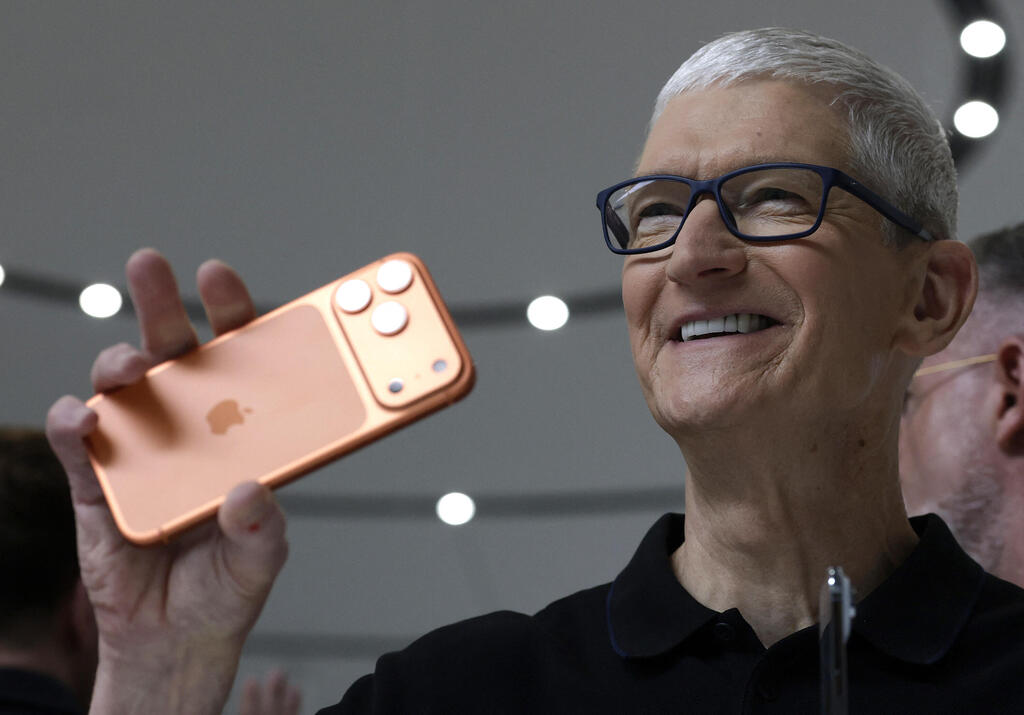
Maizels co-founded Q.ai alongside Yonatan Wexler and Avi Barliya, and all three, along with the rest of the roughly hundred-person team, are reportedly joining Apple as part of the deal. Johny Srouji, Apple's senior vice president of hardware technologies, put out one of the only on-record quotes from Apple's side, calling Q.ai "a remarkable company that is pioneering new and creative ways to use imaging and machine learning" — measured corporate language, but a genuine signal of where inside Apple's org chart this technology is expected to live: hardware, not just software.
Why this fits so neatly into 2026's Apple roadmap
The timing of the Q.ai deal only really makes complete sense against everything Apple has shipped and announced in the seven months since. At WWDC in June, Apple used its keynote to finally deliver the rebuilt version of Siri it had been visibly circling for two years — a version folded into a broader "Apple Intelligence" platform capable of pulling context from messages and photos, browsing the web on a user's behalf, and taking systemwide actions without the person opening an app themselves. Apple leaned hard on the fact that most of that processing happens on-device rather than in the cloud, a genuine point of difference from most of the rest of the industry.
A voice assistant that's finally capable enough to act as a real ambient layer across a phone, a watch, a pair of earbuds, and a headset is exactly the kind of product where silent-speech and facial-micromovement technology stops being a research curiosity and starts being genuinely useful. Whispering a command into AirPods on a crowded train without anyone else hearing it. Mouthing a word to Vision Pro without breaking whatever you're focused on. Unlocking a device or verifying who's speaking based on facial cues alone, the same broad category of problem PrimeSense solved for Face ID over a decade earlier. None of that has been officially confirmed as a shipping feature tied specifically to Q.ai's technology — Apple has said nothing publicly connecting the two beyond Srouji's original quote — but the shape of the fit is hard to miss once you lay the timeline out.
| Category | What's confirmed | What's speculation, however reasonable |
|---|---|---|
| The acquisition itself | Confirmed by Apple on Jan 29, 2026 — company name, employee transfer, no price disclosed | Exact valuation — reported between $1.6B and $2B, never confirmed on the record |
| Q.ai's technology | Documented via public patent filings — facial micromovement detection, silent/whispered speech | Whether it's already integrated into any shipping Apple product or feature |
| Product application | Srouji's statement ties the acquisition to "imaging and machine learning" broadly | Any specific link to Siri, AirPods, or Vision Pro — not stated by Apple |
| Maizels' history | Confirmed — sold PrimeSense to Apple in 2013, technology later used in Face ID | Whether Q.ai's tech follows a similar multi-year path into a flagship feature |
The bigger picture: Apple buying its way back into the AI conversation
It's worth being honest about the backdrop this deal landed against. Several outlets covering the announcement in January framed it explicitly in the context of Apple Intelligence's rocky rollout — delayed features, a Siri overhaul that took far longer to arrive than originally promised, and a general sense across the industry that Apple had fallen behind rivals like Google and OpenAI on generative AI specifically, even while continuing to lead on-device processing and hardware integration. Buying a hundred-person team with a working, patented capability that nobody else has is a fast way to close part of that gap without waiting on an internal research team to get there organically.
It also fits a pattern that's become increasingly common across the entire industry this year, and one this publication has tracked repeatedly: rather than compete purely on foundation models, the biggest tech companies have leaned hard into acquiring narrow, specific AI capabilities — the kind of technology that's genuinely hard to build from scratch but doesn't require competing head-on with OpenAI or Anthropic on general-purpose intelligence. Q.ai fits that mold precisely. Apple didn't buy a chatbot. It bought a very specific, very well-executed piece of sensing technology, and the small team who happened to be the best in the world at building it.
Frequently asked questions
How much did Apple actually pay for Q.ai?
Apple has never officially disclosed the price. A source familiar with the deal told Reuters it was valued at roughly $1.6 billion; the Financial Times separately reported an estimate closer to $2 billion, citing people familiar with the matter.
Is this really Apple's biggest acquisition ever?
Most reporting places it as Apple's second-largest on record, behind the $3 billion Beats Electronics deal in 2014. A small number of outlets described it as Apple's biggest acquisition; that framing appears to be an outlier relative to the broader coverage.
What does Q.ai's technology actually do?
Based on public patent filings, it uses machine learning to interpret whispered or fully silent speech by reading facial skin micromovements — subtle muscle activity around the mouth — and can also identify individual users and estimate physiological signals from the same facial data.
Has this technology shipped in any Apple product yet?
Not that Apple has confirmed. No public statement has tied Q.ai's technology to a specific shipping feature in Siri, AirPods, or Vision Pro — any connection to Apple's 2026 product roadmap is a reasonable inference based on timing and fit, not a confirmed fact.
The bottom line
Apple doesn't often pay Beats-level money for a company most people had never heard of, and it doesn't do it by accident. The Q.ai deal is a company betting nearly two billion dollars, give or take how you read the reporting, on a very specific idea: that the next real advance in how people talk to their devices won't be a smarter chatbot, it'll be a device that understands you before you've finished, or even started, saying anything out loud. Whether that bet pays off the way PrimeSense eventually did for Face ID is genuinely an open question that will take years to answer, not months.
What's already clear seven months out is that this wasn't a minor tuck-in acquisition or a talent grab for its own sake. It was Apple paying a premium, in secret, for a very narrow and very specific piece of the future it's trying to build — and given who's leading that team, and what he built for Apple the last time around, it's worth watching closely for exactly where this technology eventually surfaces.
Further reading on this topic
We'll follow up if Apple confirms any product integration tied to Q.ai's technology, or if further detail on deal terms becomes public. Check the Weekly Digest section for the next update on this story.
Deal terms, technical details, and statements referenced in this article reflect public reporting (Reuters, the Financial Times, CNBC, TechCrunch, The Jerusalem Post, and The Times of Israel) available as of the publish date. Apple has not officially disclosed the purchase price or confirmed any specific product application of Q.ai's technology; figures and product connections described as "reported" or "estimated" should be treated accordingly. This article does not contain affiliate links; where future articles do, they will be disclosed per our Affiliate Disclosure.