
Insights · Global Markets
Nine of the ten are American. Eight of the ten are technology companies. And the gap between #1 and #10 is now wider than the entire market cap of most G20 countries' stock exchanges combined. Here's who's actually on the list, and why the shape of it keeps getting stranger.
Market cap rankings used to shuffle around slowly enough that you could check in once a quarter and not miss much. That's not really true anymore. A company can gain or lose the equivalent of a mid-size country's GDP in a single earnings call now, and the list of the world's ten most valuable companies has effectively become a running scoreboard for the AI buildout. We pulled the latest cross-referenced figures from multiple market-cap trackers to see exactly where things stand this week, and the honest headline is: it's a more lopsided list than most people realize.
The list, as of late August 2026
| Rank | Company | Sector | Approx. market cap |
|---|---|---|---|
| 1 | Nvidia | Semiconductors | ~$5.30T |
| 2 | Apple | Consumer tech | ~$4.10T |
| 3 | Alphabet | Internet / AI | ~$3.90T |
| 4 | Microsoft | Software / cloud | ~$3.60T |
| 5 | Amazon | E-commerce / cloud | ~$2.70T |
| 6 | Saudi Aramco | Energy | ~$2.10T |
| 7 | Meta Platforms | Social / AI | ~$1.85T |
| 8 | Broadcom | Semiconductors | ~$1.70T |
| 9 | TSMC | Chip manufacturing | ~$1.35T |
| 10 | Berkshire Hathaway | Conglomerate | ~$1.05T |
Nvidia's lead over Apple alone is now larger than Amazon's entire market cap — a gap that didn't exist eighteen months ago.
Nvidia: from a dishwashing job at Denny's to the top of the world
Jensen Huang co-founded Nvidia in 1993 to build graphics chips for video games. It took thirty-two years, but Nvidia crossed the $4 trillion mark in July 2025 and hasn't really looked back, riding almost entirely on the fact that its GPUs became the default hardware for training and running large AI models. It's now sitting north of $5.3 trillion, the single most valuable company that has ever existed. Huang has talked publicly about picking Denny's as the venue for a company milestone dinner because he used to work there as a dishwasher and waiter — a detail that's become a small piece of Silicon Valley folklore at this point.
Apple, Alphabet, and Microsoft: the old guard, still enormous
The next three names on the list are the companies most people would have guessed without any help, and for good reason — Apple, Alphabet, and Microsoft have traded the #1 and #2 spots back and forth for close to a decade now. What's changed is less about any of them individually and more about the fact that none of them currently sits at the very top. Apple's business is still overwhelmingly the iPhone. Alphabet's is still overwhelmingly search and ads, now with a genuine AI research edge through DeepMind. Microsoft has leaned harder into cloud and AI infrastructure than either of the other two, largely through its long relationship with OpenAI. All three remain comfortably above $3.5 trillion, which is itself a number that would have sounded like typo a few years ago.
Amazon and Saudi Aramco: the odd couple at five and six
Amazon rounds out the pure-tech names in the top five, still powered as much by AWS's cloud margins as by the retail business most people associate with the brand. Saudi Aramco is the one name on this list that isn't American and isn't really "tech" in any conventional sense — it's the Saudi state oil company, and its presence in the top ten is a reminder that energy still matters enormously to global markets even in a year dominated by AI headlines. It's also the only company here whose share price is directly exposed to a government's fiscal decisions rather than quarterly earnings alone.
Meta, Broadcom, and TSMC: the AI supply chain, three different ways
These three names tell three different parts of the same story. Meta is the biggest pure demand-side AI spender on the list, pouring tens of billions into data centers and model training to power its ad business and its Llama models. Broadcom makes the custom AI networking and accelerator chips that hyperscalers increasingly want as an alternative or complement to Nvidia's GPUs, and it crossed the trillion-dollar mark for the first time only within the last couple of years. TSMC, based in Taiwan, actually manufactures the vast majority of the world's most advanced chips — including Nvidia's — making it arguably the single most structurally important company on this entire list, despite ranking ninth by market value.
Berkshire Hathaway: the one company here that isn't betting on AI at all
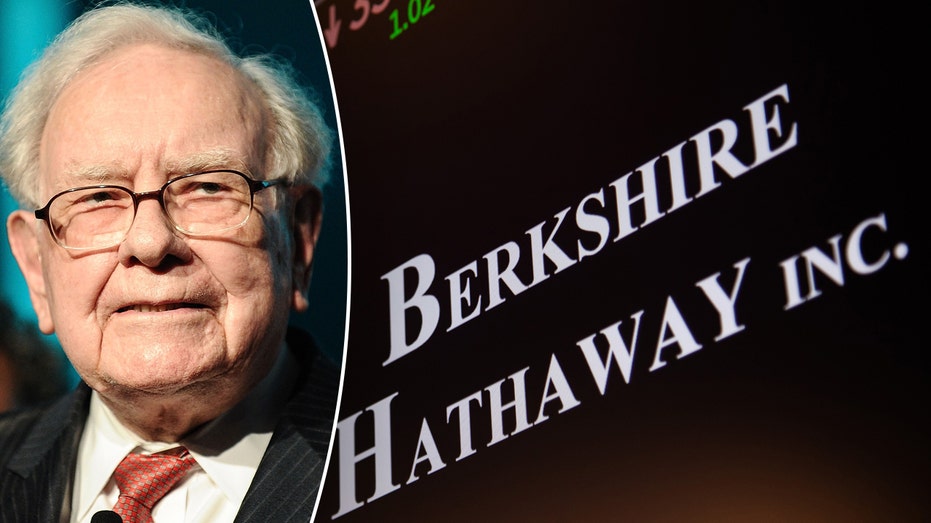
Berkshire Hathaway closes out the list as the lone genuine outlier — a conglomerate built by Warren Buffett's decades of insurance float and value investing, holding everything from railroads to candy companies to a large equity stake in Apple itself. It's the only top-ten name whose core business has essentially nothing to do with the AI buildout driving everyone else on this list higher, and its presence here is a useful reminder that old-fashioned capital allocation still counts for something even in a market this obsessed with one theme.
What this list actually shows
Zoom out and the shape of this ranking says more than any single company's story does. As recently as the early 2010s, the top ten was dominated by industrial giants — Exxon, GE, AT&T — with technology as one sector among several. Today, eight of the ten are tech companies in some form, and at least six of those eight are directly monetizing the AI buildout specifically, whether by selling chips, selling cloud capacity, or selling the models themselves. The two genuine outliers, Saudi Aramco and Berkshire Hathaway, are also the two companies on this list whose valuations would look roughly the same in a world where the last three years of AI investment simply hadn't happened.

Frequently asked questions
Is Nvidia definitely the most valuable company in the world right now?
As of late August 2026, yes, by a wide margin over Apple in second place. Market caps move daily, so it's worth checking a live tracker like CompaniesMarketCap or FinanceCharts for the current exact figure before citing a precise number.
Why do these rankings vary between different websites?
Different trackers pull data at different times of day, use slightly different share-count figures, and some convert non-U.S.-listed companies like Saudi Aramco using different exchange rates. The relative order is usually consistent; the exact dollar figures rarely match perfectly across sources.
Has Tesla fallen out of the top 10?
Yes, according to several 2026 trackers, Tesla dropped out of the top ten earlier this year, with Berkshire Hathaway and other names taking its place — a notable shift given how consistently Tesla had held a top-ten spot in prior years.
Is this list based on revenue or market cap?
Market capitalization — share price multiplied by shares outstanding. A revenue-based ranking looks meaningfully different, since some of the world's largest companies by market cap, including Nvidia, don't have the highest actual sales figures.
The bottom line
The world's ten most valuable companies used to be a reasonably diversified snapshot of the global economy — some oil, some banking, some retail, some tech. What's sitting at the top right now is closer to a leaderboard for one specific bet: that AI infrastructure spending keeps compounding the way it has for the last three years. Saudi Aramco and Berkshire Hathaway are the exceptions that prove the rule. Everyone else on this list is, one way or another, being valued on how much of the AI buildout they can capture.
Further reading on this topic
Market caps shift constantly — we'll revisit this ranking periodically as the list moves. Check the Insights section for the next update.
Market capitalization figures referenced in this article are approximate, cross-referenced from multiple public trackers (CompaniesMarketCap, FinanceCharts, AlphaSense) as of the publish date, and fluctuate daily with normal stock market activity. Figures for non-U.S.-listed companies such as Saudi Aramco reflect currency-converted estimates. Verify current figures directly with a live market data source before citing them elsewhere. This article does not contain affiliate links; where future articles do, they will be disclosed per our Affiliate Disclosure.