
Weekly Digest · Geopolitics of AI
A draft letter from the State Department. A rival organization launched in Shanghai with 29 founding members. And a growing list of countries — some of them close US allies — sitting uncomfortably in the middle of both. Here's what's actually in writing, and what it means for anyone building on AI outside the US and China.

There's a particular kind of diplomatic document that never gets a press conference of its own — no signing ceremony, no photo op, just a letter drafted quietly inside the State Department, reviewed by a handful of reporters before anyone official says a word about it publicly. That's exactly how this story broke. Reuters got hold of an internal draft in mid-August addressed to three dozen governments, and the message inside it was about as blunt as diplomatic language gets: pick the American AI ecosystem, or pick China's, because you can't credibly claim to be part of both. It's the clearest sign yet that the argument over who controls the future of artificial intelligence has stopped being about chips and models, and started being about which country gets to call itself the trusted one.
What the letter actually says
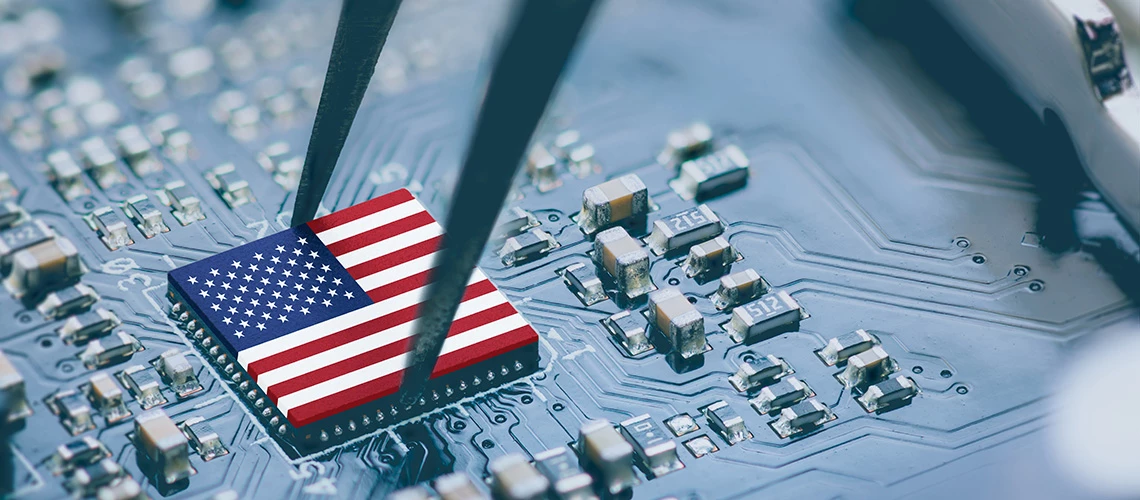
The draft, prepared by the State Department and reviewed by Reuters, is addressed to the 35 signatories of the Joint Statement on AI Opportunity — the diplomatic backbone of Pax Silica, the initiative Washington launched last year to lock down supply chains for AI models, semiconductors, and the critical minerals that feed both. According to a US official familiar with the document, the letter's purpose isn't subtle: Washington wants it made explicit that a government can't present itself as a trusted partner inside the American technology ecosystem while simultaneously signing on to an organization built around Beijing's competing vision for how AI should be governed.
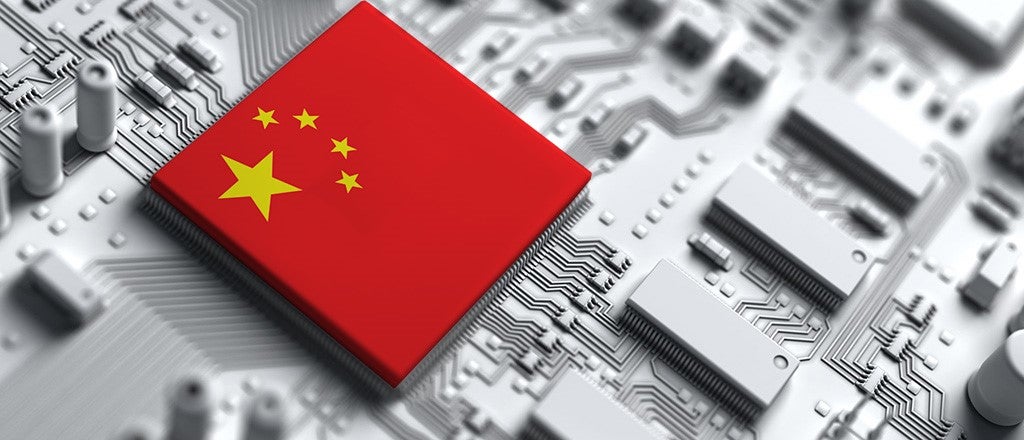
The organization in question is the World Artificial Intelligence Cooperation Organization, or WAICO, which China formally launched in Shanghai in July with 29 founding members. The idea for it didn't appear overnight — Chinese Premier Li Qiang first floated the concept from the stage of the World Artificial Intelligence Conference back in 2025, arguing that global AI governance was too fragmented and warning, without naming the United States directly, that the technology risked becoming what he called an "exclusive game" for a handful of countries and companies. A year later, that proposal has a name, a headquarters city, and nearly thirty governments willing to put their names on it.
The two frameworks, side by side

Kazakhstan is the example everyone keeps citing, and it's a good one
Reuters' reporting singled out Kazakhstan specifically, and it's not hard to see why it's become the go-to case study for how messy this split actually is on the ground. Kazakhstan sits on some of the critical mineral reserves both Washington and Beijing need to keep their respective AI supply chains running, which makes it valuable to both sides simultaneously rather than forced to choose. It's already a member of Pax Silica. It has also joined China's coalition. Under the terms of the draft letter, that dual membership is exactly the arrangement Washington wants to end — and Kazakhstan is far from the only government facing that choice. Close US allies including Japan, Australia, and South Korea are all listed among the roughly two dozen countries that have joined Pax Silica, which means the letter, if it goes out as drafted, lands on desks in allied capitals just as easily as it does in more nonaligned ones.
That's the detail that makes this bigger than a routine diplomatic skirmish. A resource-rich country with no strong alignment either way choosing to hedge its bets is unremarkable. A treaty ally being told, in writing, that hedging is no longer an acceptable posture is a meaningfully different kind of pressure — and it's the part of this story that foreign ministries are reportedly still quietly digesting.
Eighteen months from a Shanghai keynote to a State Department draft letter — this split moved faster than most trade disputes ever do.
China's actual pitch: safer, not just cheaper
It would be easy to read WAICO as a purely defensive reaction to US export controls, and there's real truth in that — China has spent the past two years operating under increasingly tight restrictions on the advanced chips and chipmaking equipment it can buy from American and allied suppliers, and Premier Li's original 2025 remarks referenced exactly that friction directly. But the framing Beijing has built around WAICO goes further than "we got locked out, so we built our own room." It's explicitly positioned around the idea of digital sovereignty — the argument that countries shouldn't have to run their economies and public services on a single foreign power's AI infrastructure, licensing terms, and export rules, whoever that power happens to be.
The sharper part of the pitch is on openness specifically. China's open-weight labs — DeepSeek, Alibaba's Qwen family, Moonshot, Zhipu, and others — have spent the past year and a half releasing genuinely competitive models under permissive licenses, often within weeks of a major US lab's closed release. Framed as safer, more inspectable alternatives to tightly licensed American systems, and free of the kind of export paperwork that comes bundled with Nvidia hardware, those models have become the actual substance behind the "digital sovereignty" argument, not just the slogan. A government in Southeast Asia or the Gulf weighing whether to build critical infrastructure on a foreign AI stack now has a genuine choice between two civilian-facing pitches, not just one dominant option with no real alternative.
Why Washington is drawing the line now
The timing here isn't incidental. WAICO's July launch in Shanghai landed with 29 founding members already signed on — a number large enough that it stopped looking like a symbolic gesture and started looking like an organization with actual diplomatic weight behind it. A US official told Reuters the goal of the draft letter was to make sure governments couldn't have it both ways: presenting themselves to Washington as trusted partners in one technology ecosystem while joining an initiative Beijing designed around a fundamentally different, competing vision for how AI should be governed globally. That's the core of the argument — not that dual membership is technically impossible, but that it's diplomatically incoherent, and Washington wants that incoherence to carry a real cost.
It's worth being precise about what this actually is, as of this week. It's a draft — reviewed by reporters, not yet published or formally delivered by the State Department. The confirmed measure so far is diplomatic pressure and the threat of coalition exclusion. It is not, at least not yet, a new export-control regime with concrete licensing or procurement restrictions attached. That distinction matters enormously for any government or company trying to plan around this, because a strongly worded letter and an actual legal restriction on technology access are very different things to build a national strategy against.
| Question | What's confirmed | What's still unclear |
|---|---|---|
| Does the letter exist? | Yes — a State Department draft, reviewed by Reuters and corroborated by multiple outlets | Whether it will be sent in its current form, or watered down before release |
| What's the actual penalty? | Exclusion from the Pax Silica coalition and its Joint Statement framework | Whether exclusion extends to concrete chip licensing or procurement restrictions |
| Who's actually affected? | All 35 Pax Silica signatories, including Japan, Australia, South Korea, and Kazakhstan | Full list of countries currently in both Pax Silica and WAICO isn't fully public |
| What is China offering instead? | WAICO, digital sovereignty framing, and a fast-growing catalog of open-weight models | Whether WAICO develops binding commitments or stays a looser cooperation forum |
The countries stuck in the middle
Set aside the two superpowers for a moment and look at this from the vantage point of everyone else, because that's genuinely where the interesting decision-making is happening. A lot of governments — resource exporters, mid-sized manufacturing economies, Gulf states building sovereign AI ambitions of their own — have spent the past two years trying to extract the best terms from both Washington and Beijing simultaneously: American chips and cloud infrastructure on one hand, Chinese investment, open-weight models, and manufacturing partnerships on the other. That balancing act has worked reasonably well up to now precisely because neither side had explicitly forced a binary choice.
This letter, if it's actually sent, is Washington trying to close that gap deliberately. Whether it succeeds depends heavily on how much these countries actually value Pax Silica membership relative to what they'd lose by walking away from WAICO — and that calculation looks very different for Japan than it does for, say, a country whose primary interest in either coalition is investment and infrastructure rather than ideological alignment. Rather than a single global answer, what's more likely is a genuinely uneven set of choices: some governments picking a side cleanly, others quietly staying in both and betting neither side actually enforces the line it just drew.
What to actually watch from here
A reviewed draft and a delivered diplomatic communication are different things. Watch for confirmation that the State Department has actually transmitted it, and in what form — softened language would be a meaningful signal on its own.
The biggest open question is whether Pax Silica exclusion stays symbolic or gets tied to actual chip licensing, procurement eligibility, or investment access. That's the line between a diplomatic warning and a real economic consequence.
Watch how Kazakhstan, and any other dual members that surface, respond once the pressure becomes explicit. A public statement either reaffirming both memberships or quietly dropping one would be the clearest real-world signal of how seriously this is being taken.
Frequently asked questions
Has the US actually sent this letter to other countries yet?
Not as of this week. What's confirmed is an internal State Department draft reviewed by Reuters and a US official's description of its intent — it hasn't been publicly published or confirmed as formally delivered.
What exactly is WAICO?
The World Artificial Intelligence Cooperation Organization, launched by China in Shanghai in July 2026 with 29 founding members, built around the idea proposed by Premier Li Qiang in 2025 for a more globally coordinated approach to AI governance.
What is Pax Silica?
A US-led initiative launched in 2025 to secure supply chains for AI models, semiconductors, and critical minerals, backed by the Joint Statement on AI Opportunity, which currently has 35 government signatories including Japan, Australia, and South Korea.
Does this mean the US is imposing new export controls on countries that join WAICO?
Not based on what's confirmed so far. The reported measure is exclusion from the Pax Silica coalition, not a new licensing or export-control regime — though that could change if the policy is formalized further.
The bottom line
This is what a technology cold war actually looks like in its early, unglamorous stages — not a dramatic sanctions announcement, but a quietly drafted letter asking dozens of governments to stop hedging their bets. Washington's argument is coherent on its own terms: you can't be a trusted partner in one ecosystem while backing a rival one built explicitly to compete with it. China's counter-argument is just as coherent on its own terms: sovereignty and openness are worth more than convenience, and an open-weight model with no export paperwork attached is a genuinely different value proposition than a closed one with strings attached.
Neither side is wrong about what it's offering. What's still unresolved is who actually has to choose, and how much it costs them when they do — and that's a question this draft letter raises far more clearly than it answers.
Further reading on this topic
We'll follow up if the State Department formally sends this letter, if WAICO adds new members, or if any Pax Silica signatory makes its position public. Check the Weekly Digest section for the next update on this story.
Details referenced in this article reflect public reporting (Reuters, CNBC, The Japan Times, MLQ News, and Chinese government statements from the World Artificial Intelligence Conference) available as of the publish date. The State Department letter described here is a reported draft, not a confirmed final or formally delivered communication, and its contents may change before, or if, it is sent. Verify current details directly with official government sources before citing them elsewhere. This article does not contain affiliate links; where future articles do, they will be disclosed per our Affiliate Disclosure.